



Group 48023
Group 48024
Geet in touch cards 2

DeepTech
Hackathon 2026

AI-Enabled Chip Design

Build breakthrough solutions for AI defect classification for semiconductor wafer/die images.
Grand Finale at IESA Vision Summit 2026 (Bengaluru) — pitch to IESA
leadership + top industry experts.

Group 48023
Group 48024
Geet in touch cards 2

DeepTech Hackathon 2026

AI-Enabled Chip Design

Build breakthrough solutions for AI defect classification for semiconductor wafer/die images. Grand Finale at IESA Vision Summit 2026 (Bengaluru) — pitch to IESA leadership + top industry experts.

About the DeepTech Hackathon 2026

The DeepTech Hackathon is a national platform for building practical, industry-ready solutions in two of the most critical technology domains shaping India’s electronics future: semiconductor design and embedded systems.
This hackathon is designed to do more than just collect ideas. It is structured to help teams move from a problem statement to a clear solution architecture, working prototype/demo, and a compelling pitch, supported by domain mentorship and a transparent evaluation framework.

real deep-tech innovation

AI Platforms & AI-enabled Chip Design

Participants will explore how AI can enhance core chip design workflows, improving performance, reducing design cycles, and enabling smarter decision-making in areas such as RTL development, verification, design-space exploration, and physical design.

AI Platforms & AI-enabled EDA for Chip Design

Participants will explore how AI can enhance core chip design workflows, improving performance, reducing design cycles, and enabling smarter decision-making in areas such as RTL development, verification, design-space exploration, and physical design.

Embedded Application Development using Development Boards

Participants will build functional embedded applications on development boards, focusing on real-world use cases such as smart sensing networks, secure gateways, RTOS-based control systems, edge AI prototypes, robotics, and industrial IoT.

Grand Finale at IESA
Vision summit 2026 - Bengaluru

The most promising teams will be shortlisted to pitch at the IESA Vision Summit 2026. Finalists will get the opportunity to present to IESA leadership, semiconductor and electronics industry experts, and ecosystem partners offering high visibility, strong credibility, and real opportunities to take solutions forward.

24389 1 1
IESA logo

ORGANIZED BY

Frame 1000004497

HACKATHON SPONSOR

i4c removebg preview 1

hackathon Partner

WHY THIS HACKATHON MATTERS

India’s electronics and semiconductor ecosystem is entering a high-growth phase, and the skills demand is shifting fast from “only coding” to deep-tech building across silicon + embedded systems. Chip design complexity is rising, and companies worldwide are increasingly adopting AI/ML inside EDA workflows to improve productivity in areas like verification, PPA optimization, and design-space exploration. At the same time, real products are being built and deployed at the edge (devices, gateways, industrial IoT), where low-latency, secure, reliable embedded applications matter. This hackathon directly aligns with these trends by creating a national platform for talent to build industry-relevant prototypes in two future-critical tracks AI-enabled chip design and embedded development on boards and culminates in a high-value opportunity: finalists pitch at IESA Vision Summit 2026, Bengaluru, in front of IESA leadership and senior industry experts, turning hackathon work into real ecosystem visibility and next-step opportunities.

iesa box img 1

Builds talent for AI + EDA and embedded/edge two of the fastest-growing deep-tech skill areas.

Collaborative Work Session 1

Moves teams beyond ideas to working demos + measurable outcomes (benchmarks, results, documentation).

Futuristic Robotics Lab 1

Moves teams beyond ideas to working demos + measurable outcomes (benchmarks, results, documentation).

iesa box img 2

Offers a unique advantage Vision Summit stage access for finalists to pitch and network with the ecosystem.
problem statement

Edge-AI Defect Classification for Semiconductor Images

Semiconductor fabrication involves hundreds of tightly controlled steps. Any step can introduce microscopic defects that impact performance or cause catastrophic failures. Modern lines generate terabytes of inspection images daily, captured using tools such as optical microscopes, Scanning Electron Microscope (SEM), Atomic Force Microscope (AFM), and defect review stations.

Centralized analysis/manual review struggles due to:
  • High latency
  • Expensive infrastructure
  • Network/bandwidth bottlenecks
  • Difficulty scaling to real-time throughput Edge-AI enables on-device defect analysis with minimal latency and reduced dependency on cloud connectivity, aligned with Industry 4.0 manufacturing environments
Semiconductor manufacturing produces large volumes of wafer and die inspection images. Defects in these images can reduce yield and cause failures, but traditional centralized/manual inspection creates latency, bandwidth bottlenecks, and high infrastructure cost, making it difficult to scale to real-time production needs.

Your task is to build an Edge-AI capable system that can detect and classify defects in semiconductor wafer/die images using AI/ML, while balancing accuracy, latency, and compute efficiency to reflect real fab constraints.

Design and build an Edge-AI powered defect classification system capable of:

  • Detecting and classifying defects in wafer/die images into predefined categories
  • Demonstrating strong accuracy with lightweight compute (edge constraints)
  • Supporting real-time, high-volume inspection workflows by being portable to edge
    deployment flows (NXP eIQ)

Scope & Key Requirements

  • Select at least six distinct, non-overlapping classes of semiconductor manufacturing defects (for example: shorts, opens, bridges, malformed vias, CMP scratches, cracks, LER, etc.; refer to the reference section for sample images). In addition to these defect classes, include the categories “Clean” and “Other”, resulting in a minimum of eight total classes.
  • Gather images representing both clean and defective samples from any available source to build your own dataset. No dataset will be provided during the Hackathon, except in Phase 2, where a test dataset will be supplied exclusively for prediction.
  • Ensure the dataset includes a minimum of 500 images covering clean, defective, and “Other” categories, with a well-balanced distribution across all classes. For improved model performance, a dataset of more than 1,000 images is recommended.
  • Prefer using black-and-white (single-channel) images; color images are not recommended.
  • Use Python for development.
  • Framework: TensorFlow, PyTorch, or any other AI framework (allowed).
  • Training approach: from scratch or transfer learning (allowed).
  • Target: achieve good accuracy with low model size and high portability for edge deployment.
  • Port the trained model using the NXP eIQ platform targeting NXP i.MX RT series devices.
  • No hardware or board demo is in scope; the process ends at generation of deployment artifacts or bit-file outputs as per the defined flow.
  • Technical support from Hackathon organizers for this step is limited to online documentation.
  • Document the end-to-end approach, including innovation highlights, challenges faced, and future scope.
  • Present the solution in a clear and structured manner covering dataset, model, evaluation, edge porting, and impact.

Teams must submit the following (as applicable by phase):

  1. Document describing problem understanding, approach, dataset plan, model plan, etc., as provided in the template. Submit a filled PDF document.
  2. Dataset: a single .zip file of images with class categories. Follow the folder structure to group images into Train, Validation, and Test folders, each containing sub-folders for “clean”, “other”, “defect class Name_1”, “defect class Name_2” … “defect class Name_N”.
  3. Trained ML model in ONNX format.
  4. Model results on your test set, including Accuracy, Precision, Recall, Confusion Matrix, Model size, Algorithm used, and platform used for training and inference.
    • Note: If GPUs or cloud infrastructure were used, please specify.
    • Note: The model may be built from scratch or using pre-trained models with transfer learning.
  5. GitHub repository link (mandatory) with a README and complete development code.
  6. Model results on the hackathon test set, including Accuracy, Precision, Recall, and Confusion Matrix.
  7. NXP eIQ ported model results provided as a text file of the instruction stack (as per eIQ documentation).
  8. Complete code covering preprocessing, training, and inference.
  9. Final documentation addressing the end-to-end solution, covering development and learnings from all stages.

Evaluation Data Rule: After the phase-1 submission deadline, the submitted model becomes the
reference model, and no re-submission is allowed. Teams then proceed to next steps and edge-
porting.

PhasePhase 1Phase 2Phase 3
Who participatesAll teamsShortlisted teams for Phase 2 (30 Teams)Finalists (10 Teams)
GoalRegister and submit the first version of the solution and approachValidate model generalization using organizer-provided test imagesDemonstrate edge readiness and deliver final pitch
What teams must submit (Deliverables)Items #1–5 of deliverables mentioned aboveItem #6 of deliverables mentioned aboveItems #7–9 of deliverables mentioned above
Evaluation Criteria1) Dataset quality, dataset size, class balance, model accuracy, model size.
2) A Minimum of 500 images (Clean + Defective)
Prediction accuracy, number of defect classes the model can classify, model sizeSuccessful generation of bitfile, size of generated model stack, patentable concepts,
innovation, publication possibility, methodology
Steps1) Data collection and dataset creation, proposed methodology
2) AI/ML model development
1) Prediction using hackathon-supplied test dataset1) Model porting and optimization for Edge-AI
2) Presentation and documentation
  • The hackathon is aimed at an intermediate development level, positioned between a prototype and a fully functional solution. Participants are encouraged to explore diverse ideas and demonstrate creativity in their approach to the challenge.
  • During Phase 1, participants are encouraged to prepare for Phase 3 by pre-reviewing requirements related to compatibility, portability, and model conversion formats.
  • For Phase 3, no hardware boards will be provided as part of the hackathon. The phase concludes with the generation of a bit-file. Support for Phase 3 is limited to existing online documentation, and no additional support will be provided.

Hackthon roadmap

19 JAN 2026

Registrations Open (Only Registration)

Team registrations go live. Create your team and complete registration early so you’re ready when problem statements are revealed.

21 JAN 2026

Problem Statements Revealed

Official problem statements are published. Review problem statement and start planning your approach..

23 JAN 2026

Orientation Session (Online)

Join the official orientation to understand the problem statement, objective and delivery, hackathon flow, submission format, evaluation criteria, and tips to build a strong entry.

28 JAN 2026

Webinar / Q&A session 1

Join quick interactive webinars to understand the concept and get clarification on doubts.

04 FEB 2026

Webinar / Q&A session 2

Join quick interactive webinars to understand the concept and get clarification on doubts.

8 FEB 2026

Phase 1 Submission Closes

Final deadline for Phase 1 idea submission. Make sure your entry follows the template and is complete.

11 FEB 2026

Announcement of Semi-Finalists (Phase 2 Teams)

Selected teams for Phase 2 will be announced on email/portal. Next-step instructions and Phase 2 requirements will be shared..

12 FEB 2026

Phase 2 Kickoff Session (30 Selected Teams Only)

Mandatory online session for Phase 2 teams realted to deliverables & expectations..

18 FEB 2026

Phase 2 Submission Closes

Submit Phase 2 deliverables.Final deadline for Phase 2 submissions. No changes accepted after this.

19 FEB 2026

Finalists Announcement (Top Teams for Grand Finale)

Finalists are announced and onboarded for the Vision Summit Grand Finale. Travel and venue instructions will be shared.

21 FEB 2026

Mentoring for Finalists (Closed Sessions)

Focused mentoring to polish the solution, strengthen demo readiness, and finalize the pitch deck.

24-25 FEB 2026

Team Arrival & Venue Onboarding (Bengaluru)

Focused mentoring to polish the solution, strengthen demo readiness, and finalize the pitch deck.

25-26 FEB 2026

Grand Finale @ IESA Vision Summit 2026 (Bengaluru)

Finalists pitch on the Vision Summit stage to IESA leadership and senior industry experts. Winners are announced with prizes and next-stage opportunities.

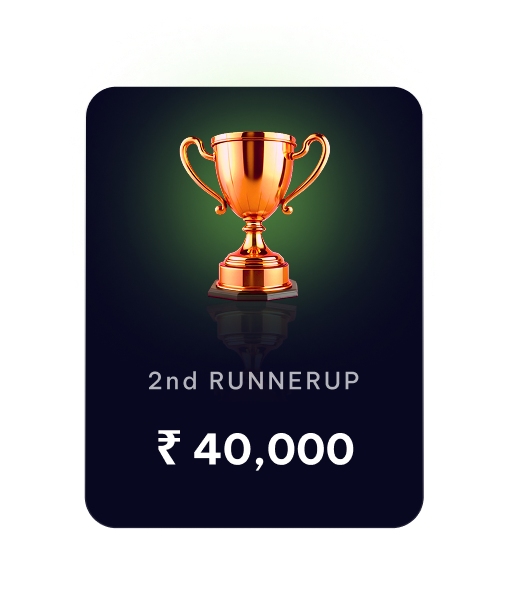
Prizes & Recognition

Celebrate brilliance and innovation with exceptional prizes and prestigious recognition!
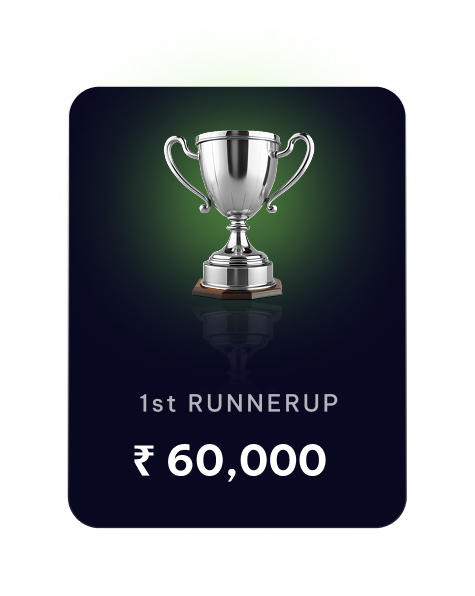
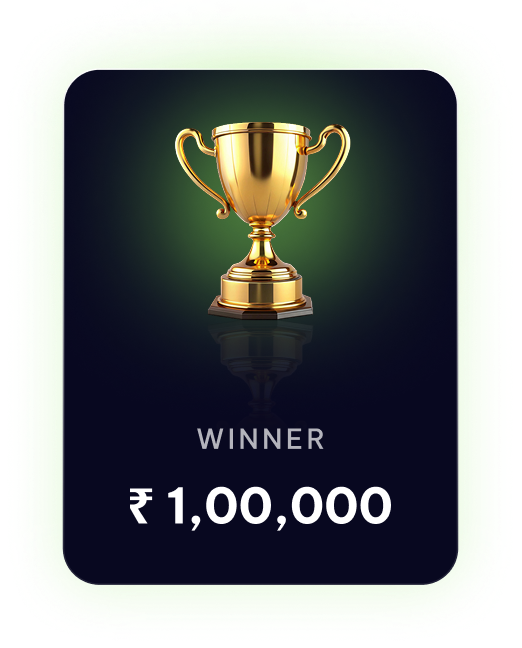
Total Prize Pool: ₹2,00,000

1st
winner
2nd

Beyond Cash — What Finalists Get

Access to IESA Vision Summit 2026 - Bengaluru

Finalists get the opportunity to attend the summit and pitch on a high-visibility stage in front of IESA leadership and senior industry experts.

Sponsor Kits & Tool Benefits

Exclusive hardware / development kits, tool credits, and goodies from sponsoring partners (subject to sponsor availability).

Recognition & Visibility

Certificates, digital badges, and feature highlights across IESA + i4C channels for top teams.

High-Value Networking

Direct networking with industry leaders, semiconductor & embedded experts, startups, and ecosystem partners at the summit.

Internship & Job Opportunities

Top teams get visibility for internships, hiring opportunities, and project collaborations with participating companies and partners.

MENTORS & JURY

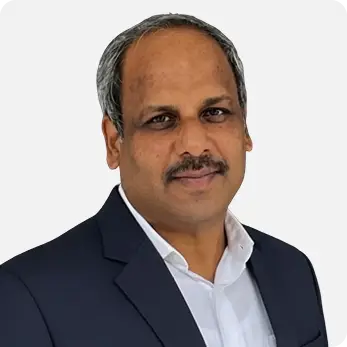
Pratap Sanap

Head – Research & Innovation
Neilsoft | Secretary, i4C

A technology leader with 22+ years of expertise in software development, specializing in embedded systems and web applications.

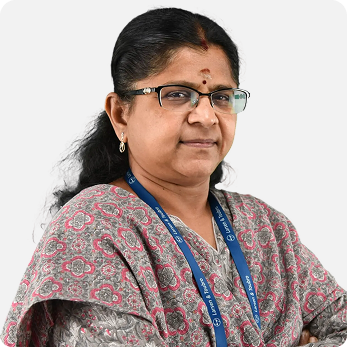
Dr. B. Venkatalakshmi

Lead Subject Matter Expert
L&T EduTech

A passionate educator with 30+ years’ experience in engineering education, specializing in curriculum design, pedagogy, evaluation, and technologies.

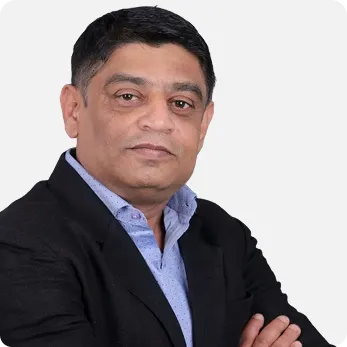
Rajesh Shah

Founder & CEO
10cTechClub

Startup entrepreneur and educator with 25+ years experience, founder of 10xTechClub delivering experiential learning.

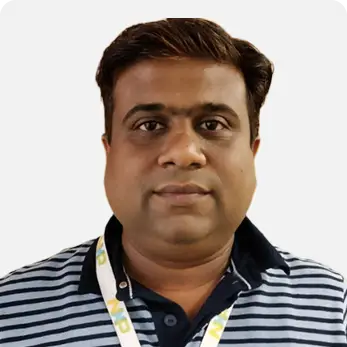
Bharat Shivaji Kokate

Head - Embedded Systems
Aeron Systems Pvt. Ltd.

Bharat Kokate, Head of Embedded Systems and scrum Master, brings 17+ years’ expertise, mentoring innovation through hackathons.

ABOUT IESA

India Electronics and Semiconductor Association (IESA) is India’s leading industry body for ESDM, semiconductors, and intelligent electronics, connecting industry, startups, academia, and policymakers to strengthen India’s innovation and manufacturing ecosystem.

IESA VISION SUMMIT 2026 - Grand Finale

IESA Vision Summit 2026 is IESA’s flagship industry gathering focused on advancing India’s semiconductor and electronics (ESDM) ecosystem bringing together industry leaders, policymakers, startups, academia, and technology experts for strategic discussions, partnerships, and showcases. The 2026 theme is “Design to Manufacturing — Synergy of Product, Production and Skill”, emphasizing India’s transition toward a Product Nation, Production Nation, and Skills Nation.

Delegates

2000 +

Exhibitors

60 +

Keynotes

20

Panel Discussions

6 +

Sessions

25 +

Frequently Asked Questions

Still you have any questions?

Students can register their Teams directly. One student from the team who is the Team leader must register & choose the designation as Team leader as mentioned on the portal and the team members.

Registration Process document

Students from any stream, Btech, BE, BCA, MCA, PhD, Etc.

2–4 members (recommended).

Development is online;  Grand Finale at IESA Vision Summit 2026, Bengaluru.

Deck + demo/prototype + documentation + repo/video (as applicable).

For embedded track, teams may use their own dev boards and hardware.

Innovation, feasibility, technical depth, impact, demo quality.

Max 10-12 teams will make it to the grand finale.

    • Problem statements have been shared on website and brochure. Teams are free to select any problem statement that appeals to them.
    • Teams may apply to multiple problem statements; however, if multiple submissions are selected and the team gets a chance to go into the finals, then the team may only participate in one problem statement for the final event.
    • Post idea submission process, the ideas will be evaluated by experts.
  • Evaluation criteria will include novelty of the idea, complexity, clarity, and details in the prescribed format, feasibility, sustainability, the scale of impact, user experience, creativity and simplicity, and potential for future work progression.

All updates related to the hackathon will be given on the website itself and email will be sent for ease of communication. We would recommend regularly following the i4C website, to avoid inadvertently missing any emails. Please add support@i4c.into avoid emails from us going into your Spam / Junk folder.

    • The prizes will be mentioned in detail on our landing page and brochure.
    • If there is a tie between two or more teams, the final decision of the prize money distribution will be taken by the organizer of the event, and all decisions are final.
    • Organizers have the right to not announce the prize money or winner if the idea or solution is not satisfactory or deserving.
    • The team members of every winning team will be individually awarded a certificate.
  • Apart from the winners, all other teams who submitted the idea will get a participation certificate, and teams selected for the finale will get a finale certificate.
    • Intellectual property (IP) of all submitted ideas shall lie with the student innovators.
    • If the ideas are selected for further development support, IP sharing would be applicable, and details will be decided upon and formalized accordingly.
  • The ideas or solutions provided/developed/proposed by the team must be new and must not have been present in any previous event/program of any sort. Any IP infringement will not be tolerated and will be dealt with seriously.

Resources at Your Fingertips

Get all the details about the hackathon, including problem statements, timelines, prize information & FAQ.

Hackathon Details

Download the brochure to know the FAQs of the hackathon.

Hackathon Idea submission Template

Click below to download reference idea submission template.

Problem statement Explanation

Click below to know problem statements in more details.

How to register for hackathon

Click below to know how to register for the hackathon.

Follow for updates

©2026 Inter Institutional Inclusive Innovations Centre. All rights reserved